
July Nature News
|
Baby Quail by Jill Zwicky. |
Nesting Season Starts to Wind Down
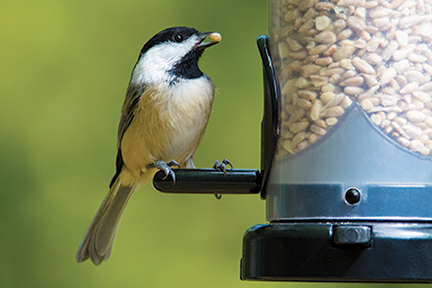
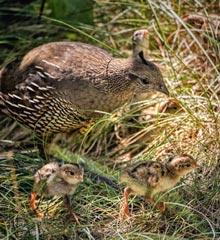
By July, most of our local songbirds have already completed nesting, with young birds out of the nest and in various stages of independence from their parents. A few species run a little later than the average though, and can still be seen with their first brood of young for the season. Among feeder-visiting songbirds, goldfinches are the most notable of this late-nesting cohort and can be seen this month with newly fledged young following their parents and begging to be fed. California quail are another relatively late nester, as they similarly time their nesting to coincide with summer-maturing seeds rather than the earlier insect peak that many songbirds take advantage of. For most earlier nesting species, such as titmice, chickadees, juncos, and house finches, young birds seen in July or August are probably the offspring from the second brood of the year. Seconds broods are fairly common with many species, and if conditions are encouraging even third broods are possible.
|
Local photo by Susie Kelly. |

The maturing of first brood young and the continued arrival of more babies means that activity at feeders is generally higher now than it was in earlier spring (say March-April), when many natural food sources were also at their peak. This is somewhat of a temporary bump while young birds are both 1) still alive, and 2) associating with their parents. A large portion of the birds born each year do not survive to adulthood (think of the math: perhaps 4-8 eggs laid per songbird couple each year, yet populations remain roughly stable). And some birds such as towhees and titmice have a base population of two birds per yard, only temporarily increased until the kids grow up and move on. Overall, we tend to see another lull in feeder activity in late August and September until October when natural seed crops pass their peak and wintering sparrows arrive to supercharge the collective backyard appetite.
In addition to higher general populations, you may also see some different species of birds in your yard as birds disperse from their nesting sites. For example, hooded orioles nest exclusively in palm trees, but often wander more widely in July and August before returning to Mexico, happily stopping at nectar and jelly feeders to fuel their long journey. This can happen with a variety of birds that summer in our general region, but may have specific nesting habitat requirements that are not met in your yard: so watch out for passing grosbeaks, tanagers, and woodpeckers around your home, even if you don’t have the ideal forested habitat they need for nesting.
Things Start to Move Along the Coast
Along the coast many seabirds continue to nest through July, including cormorants, gulls, murres, and guillemots. The coast is also the place to see migratory birds well before land bird migration gets underway. First come “the Three Amigos,” three birds that breed in Mexico then disperse northward along the California coast throughout the summer and into fall: brown pelicans, Heermann’s gulls, and elegant terns. (For more on the Three Amigos, see this vintage article by Rich Stallcup.) One good place to watch the dramatic sky-to-sea fishing dives of pelicans and terns over the next few months is Richardson Bay, described here by friend of the store David Lukas.
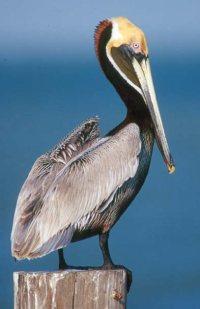 Brown Pelican Brown Pelican |
(While we’re talking about pelicans, what’s the deal with the migratory oddities of our other species of huge-billed aerial window washer, the white pelican? Like their brown cousins, white pelicans do not breed here and yet they can be seen here in July and August. What are they up to? In their case, the usual trend is to head east to breed on a number of big inland bodies of water, then head back to the coast or south after nesting. When dealing with great big 15 pound lumps of birds like these, however, it typically takes birds a few years to become mature, successful adults, with the consequence that a fair number of younger, non-breeding birds stay with us essentially all year round. All the intricacies of white pelican migration are not perfectly understood, but the basic picture is that we have some all year round, although they don’t actually breed in the Bay Area, and then more in the winter.)
(While we’re talking about when in the year different birds are at their most abundant, one invaluable resource is the Checklist of Marin County Birds published by Marin Audubon Society. They’ve just come out with the glossy latest edition, available in the store for $8. We also have a few of the old non-glossy edition left, which we’re practically giving away for a mere $3. In addition to listing all the birds seen in the county, the checklist also has a very helpful, month-by-month abundance chart.)
Migration proper does start its first murmurings from the north this month as shorebirds begin to reappear after their short, focused breeding season in the way north. The most numerous of these on local mudflats are the diminutive least and western sandpipers, who will be followed by far greater numbers of their kind in the upcoming months. July and August will also see the accelerating migration of large shorebirds like marbled godwits, long-billed curlews, and whimbrels. Meanwhile, the migratory songbirds who bred here with us in our moderate latitudes are not in such a hurry to head south and will largely stay in the region through August or even into September.