June Nature News
The beginning of June finds us in the middle of the nesting season, with the first round of fledgling birds already out and about, but a great many more still to come. Over the course of the month you will see the gradual waning of breeding season behaviors like singing and feeding of young birds by their parents, which are still very widespread and visible right now. June is probably the slowest month of the year for migratory movements (we’ll start to see southbound shorebirds in July), so the substantial fireworks of the nesting season are the main event of the month before they trail off in a slow coda through late summer.
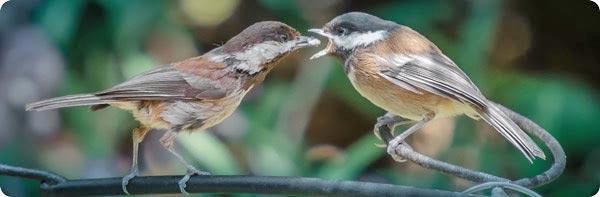
Young chickadee being fed Bark Butter - Local photo by Susie Kelly
Babies are here
|
|
Over the course of May, a wide number of birds hatched and fledged young. In the backyard, house finches, titmice, chickadees, and juncos have been among the most obvious, since we can often see the young birds following their parents and begging for food. But small birds grow up quickly! Already the size of their parents when they leave the nest, it only takes a few weeks for most songbirds to become capable of feeding themselves and leaving off the tell-tale flapping of wings and crouching with open beaks as they entreat their parents to stuff some delicious caterpillars or suet into their gaping gullets. Some of these birds, particularly house finches, will often have a second brood of young once they have finished raising the season’s first generation.
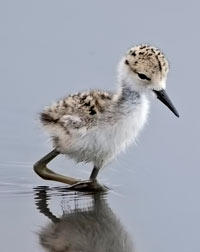
Beyond the yard, June is also still a good month for watching the growth of young waterfowl and shorebirds. Unlike songbirds which are bound to the nest for the first few weeks of their life, until they are capable of flight, waterfowl, shorebirds, and some landbirds like quail have what are called precocial young. Since these birds don’t need to develop the feathers and strength needed for flight, they can more or less pop out of the eggs and start running around on shaky little legs, soon adding inquisitive pecking to their skill set. We have many more shorebirds and waterfowl in the winter than during the spring breeding season, but you can still visit ponds like Las Gallinas or Shollenberger to see young mallards, pied-billed grebes, or gallinules and wetlands like Rush Creek to find young American avocets or black-necked stilts. Nesting activity will also continue on through June along the coast where murres, cormorants, and pigeon guillemots reside.
|
|
More babies are coming
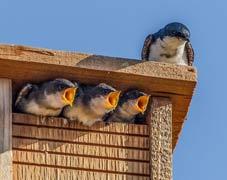
That first batch of resident (i.e. non-migratory) songbird babies started appearing out of the nest weeks ago. Many other resident birds will be fledging young any day now, including jays, towhees, wrens, and more. Migratory birds such as swallows, orioles, warblers, and flycatchers are usually a little behind that first round of babies, but they too will be fledging young this month. We do have some bird species, including residents such as goldfinches and California quail that specialize in seeds rather than insect food and so will delay their nesting until a little later in the summer: look for their young in late June or July.
Seasonal feeder activity
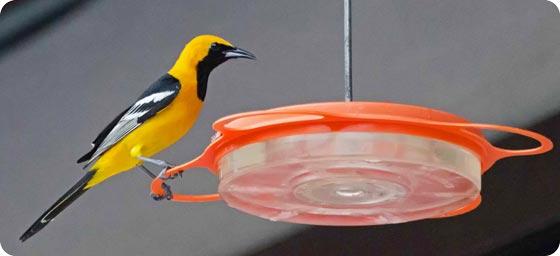
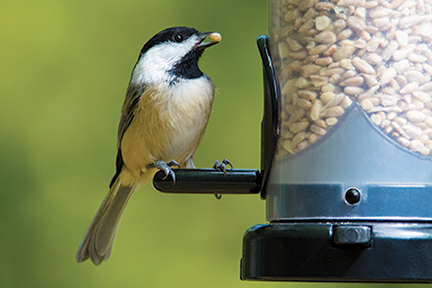
The arrival of all these babies means that activity at feeders typically picks up in June – August compared to April and May. For some species, however, feeder activity may continue to be sporadic. Goldfinches in particular visit Nyjer feeders much less throughout the summer (until October or so). You may have better luck offering sunflower chips or No-Mess Blend, which will attract what goldfinches do visit your feeders, as well as a variety of other species. Hummingbirds may also periodically disappear from feeders if nearby plants are blooming profusely or if favored insects are abundant. Keep your nectar mix fresh and they will return! If you’ve been attracting beautiful golden orioles to your hummingbird feeders or to special feeders offering jelly or mealworms, you can look forward to them staying around through June and July, and then typically embarking on a period of rambling before heading south in earnest in late August.
|
Male Hooded Oriole |